Authors

Emmanuel Darras

Emmanuel Darras
We are thrilled to announce that Kestra has raised $3 million of funding to make orchestration more accessible, collaborative, and scalable.
We aim to empower a wide range of users, from software engineers to data professionals, by simplifying and unifying their automation and orchestration needs. We envision Kestra as the go-to solution for organizations seeking simple and versatile orchestration.
Through a seamless UI and IDE access, all workflows — from those orchestrating mission-critical applications, business processes, and data pipelines to simple automations — can be version controlled and governed using engineering best practices.
Since its inception, Kestra has experienced significant traction as an open-source project, thriving with a vibrant community of users and contributors. Thousands of companies, from startups to large enterprises, including Huawei, Leroy Merlin, Tencent, Gorgias, Sophia Genetics, and Decathlon, are already orchestrating their business-critical workloads with Kestra.
Kestra’s innovative approach to orchestration aims to overcome the challenges posed by hyperspecialization in various domains — be it data orchestration, process and microservice orchestration, or infrastructure and business automation. Such hyperspecialization has often resulted in organizational silos, hindering collaboration and operational excellence.
To address this, Kestra offers a versatile and language-agnostic developer platform while simultaneously providing an intuitive user interface tailored to business professionals. This holistic solution aims to bridge the gap between different organizational units, thereby fostering a collaborative environment conducive to greater operational efficiency.
Our initial mission was to build the most efficient open-source workflow platform targeting the data engineering space. Since then, we’ve experienced tremendous growth well beyond that domain. Our users leverage Kestra not only to orchestrate data pipelines but also to power their business-critical applications. They use our platform to orchestrate microservices and applications feeding data to their end products, and then they use Kestra for analytical workflows to understand how their products are performing. This way, Kestra serves as a universal orchestration solution for their business.
After talking to our customers and design partners, we’ve realized that software engineers have been largely neglected when it comes to orchestration. Most tools from that category are primarily built either for data engineers (tools like Airflow), DevOps (CI/CD and infrastructure management systems), or business users (drag-and-drop automation frameworks). Kestra is the first orchestrator that empowers engineers to build internal platforms powering their mission-critical operations and analytics.
Software engineers appreciate the API-first design and robust, scalable, cloud-native architecture of our product. Event-driven capabilities are within Kestra’s DNA, enabling the creation, execution, and real-time monitoring of workflows at any scale. Kestra can efficiently process millions of events and ensures that businesses can reliably expand without sacrificing performance.
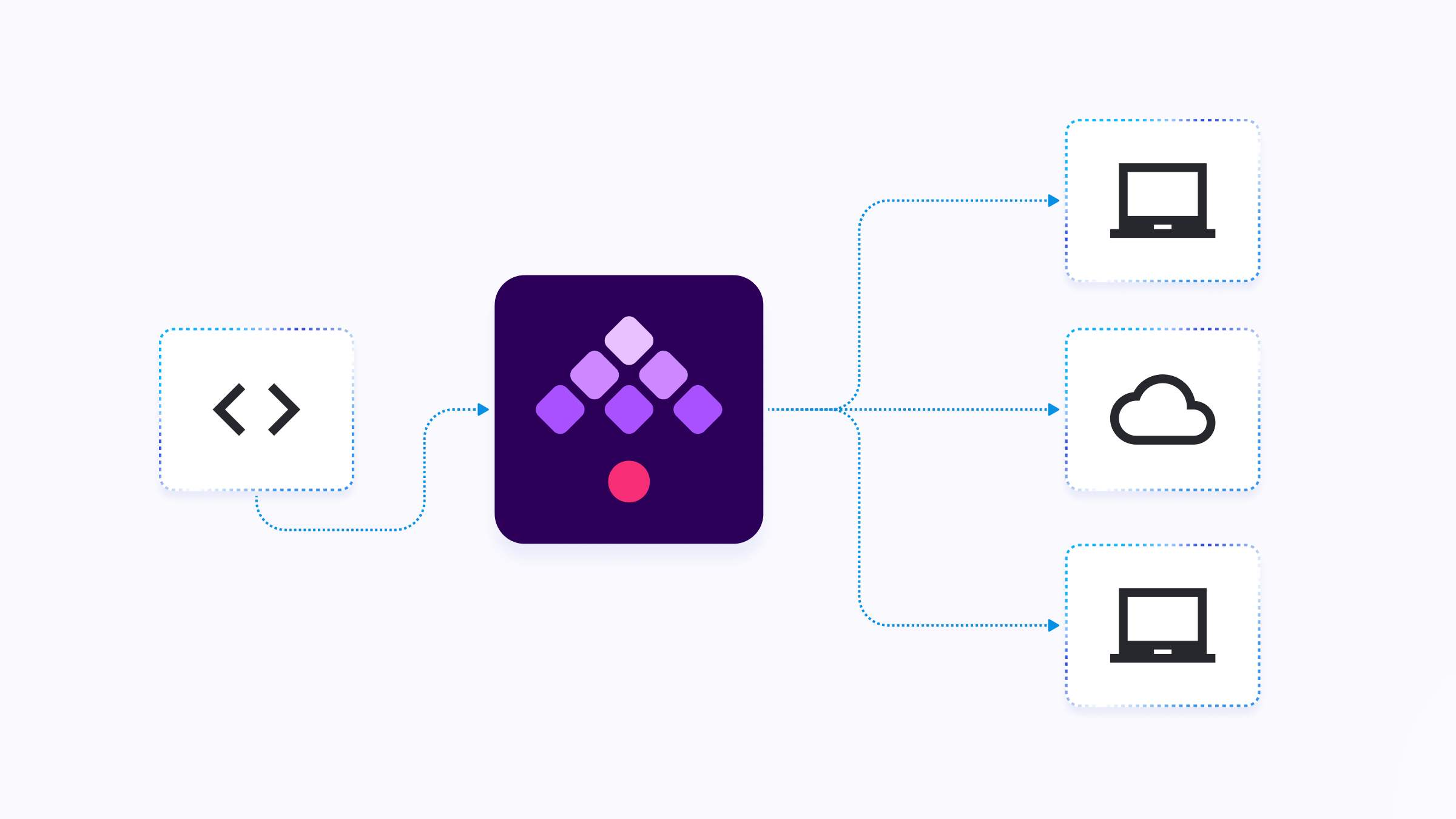
In terms of language compatibility, Kestra supports tasks written in a wide array of programming languages, including Python, R, Node.js, Julia, Rust, Bash, PowerShell, and anything that can run as a containerized process. Kestra’s flows can run anywhere — from your laptop or on-prem VM to a Kubernetes cluster in a public cloud. Thanks to the extensible integrations ecosystem, including features such as custom plugins, triggers, tasks, blueprints, and fully customizable scripts and microservices, the product keeps evolving along with the business requirements of our users.
In contrast to orchestrators that confine workflow creation to a single programming language, Kestra leverages a declarative YAML interface that democratizes orchestration and facilitates participation from developers utilizing diverse technology stacks. What our users appreciate most is that our product brings Infrastructure as Code best practices to all workflows — from those orchestrating mission-critical operations, business processes, and data pipelines to simple Zapier-style automations. Everything can be version-controlled and governed using software engineering best practices. Whether you make changes through the user interface, CI/CD, or via API calls, those changes are always automatically reflected in the codebase. This API-first approach fosters a synergistic workspace, allowing our users to build an internal platform loved by engineers and business stakeholders.
Kestra strives to be the easiest-to-use orchestration tool on the market. Our users construct their first scheduled or event-driven workflow in a matter of minutes via our intuitive user interface or API, thereby obviating the need for complex deployment processes. We are steadfast in our belief that a simple orchestration API leads to greater reliability and extensibility than convoluted client-side frameworks.
The introduction of a fully-managed offering is among our upcoming milestones, further simplifying the user experience by removing the complexity of managing infrastructure. This will serve as an additional option alongside our existing Kestra Enterprise solution.
We’ll be working on many exciting features to make orchestration not only reliable, but also enjoyable. This includes, among others, a new code editor, additional remote infrastructure and marketplace offerings, along with many new integrations.
We’re incredibly grateful for the support and confidence shown by our investors, community, and customers. This funding enables us to further our vision of making Kestra the go-to orchestration platform.
If you want to support us in our journey, give us a GitHub star and join the community.
This funding was co-led by ISAI, Axeleo Capital, alongside several SaaS and open-source experts angel investors, including:

Stay up to date with the latest features and changes to Kestra