Authors

Emmanuel Darras
CEO & Co-Founder
Emmanuel Darras
CEO & Co-Founder
Despite growing demands for orchestration, CI/CD, and end-to-end monitoring across all operational and data workflows, many teams still depend on scattered tools that manage only parts of the process. This tool-driven approach reduces productivity, complicates maintenance, and delays troubleshooting.
The alternative? A unified platform that integrates workflows, supports open standards, and scales flexibly — applying DevOps best practices not just to software, but across all Ops disciplines.
While many data platforms market DataOps as the ultimate solution, implementing DataOps alone often creates yet another layer of complexity. Instead of managing workflows in isolation or simply mirroring DevOps, the solution lies in an Ops-Everything approach — where all operational workflows are centralized and integrated.
Data workflows are often spread across ETL/ELT platforms, machine learning tools, data warehouses, and various language-dependent scheduling systems, each creating silos that lead to key issues:
What’s needed is an OPS-everything model — a unified orchestration layer that provides centralized visibility and integrates with existing tools, allowing organizations to scale without added silos.
To achieve scalable, resilient workflows, teams need an orchestration platform that supports automation across data and operational workflows with the same rigor as DevOps. Effective orchestration centralizes integration, visibility, and consistency across lifecycle stages. Here’s what an ideal solution should include:
Establishing an effective Ops-Everything framework requires a comprehensive platform that integrates best practices, adaptability, and transparency across all operations. To build a mature Ops strategy, organizations should:
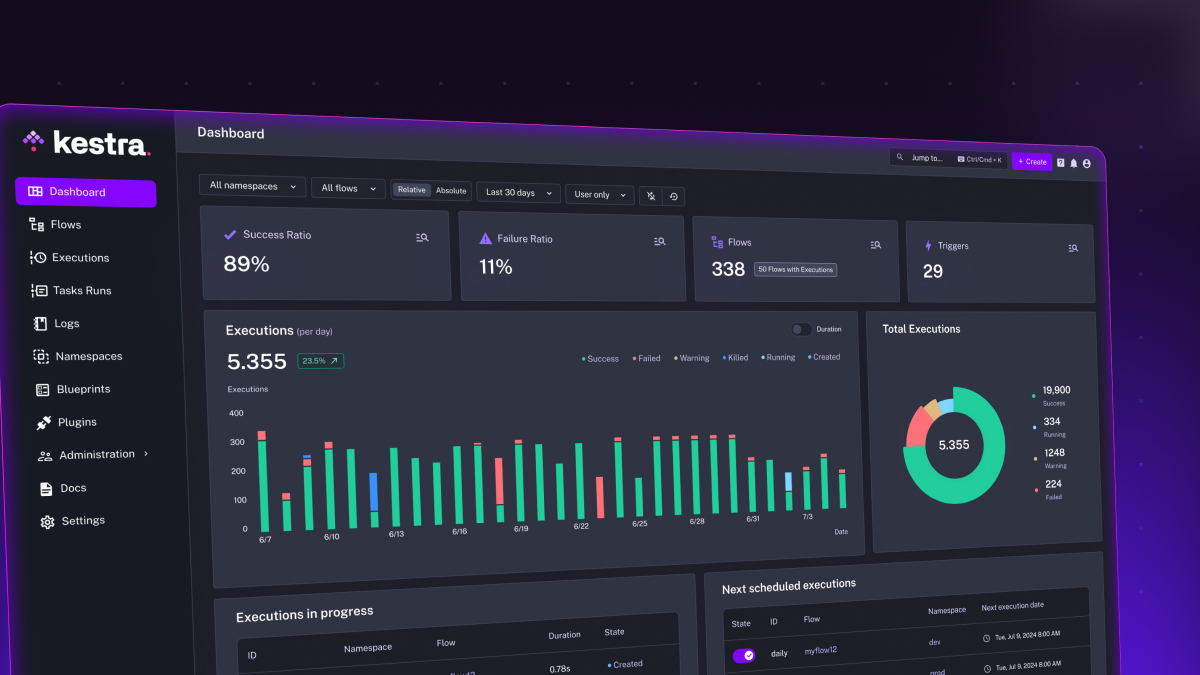
At Kestra, we’re working to build this unified approach, creating an orchestration platform that meets operational needs across data and engineering. Our customers Gorgias and Leroy Merlin France underscore the transformative potential of unified workflows. Gorgias integrates Kestra with tools like Airbyte, dbt, and Hightouch, optimizing Infrastructure as Code practices, while Leroy Merlin relies on Kestra to support its data mesh, giving business units orchestration access without shadow IT.
Kestra’s approach is adaptable and vendor-neutral, allowing organizations to scale operations on their terms, with open standards and modular integration. Moving from fragmented tools to Kestra empowers teams across domains to follow Ops best practices, delivering cohesive, resilient workflows.
A unified platform is the future of Ops — scalable, transparent, and open to collaboration. Consider Kestra as a step toward flexible orchestration for diverse workflows, designed to ensure teams can work together effectively while building on best practices across domains.
If you have any questions, reach out via Slack or open a GitHub issue. If you like the project, give us a GitHub star and join the community.

Stay up to date with the latest features and changes to Kestra