


 Instance Management in Kestra Enterprise – Services and Maintenance
Available on:
The Instance menu gives you a centralized view of your Kestra deployment's health along with controls for upgrades, maintenance, and user notifications.
Overview
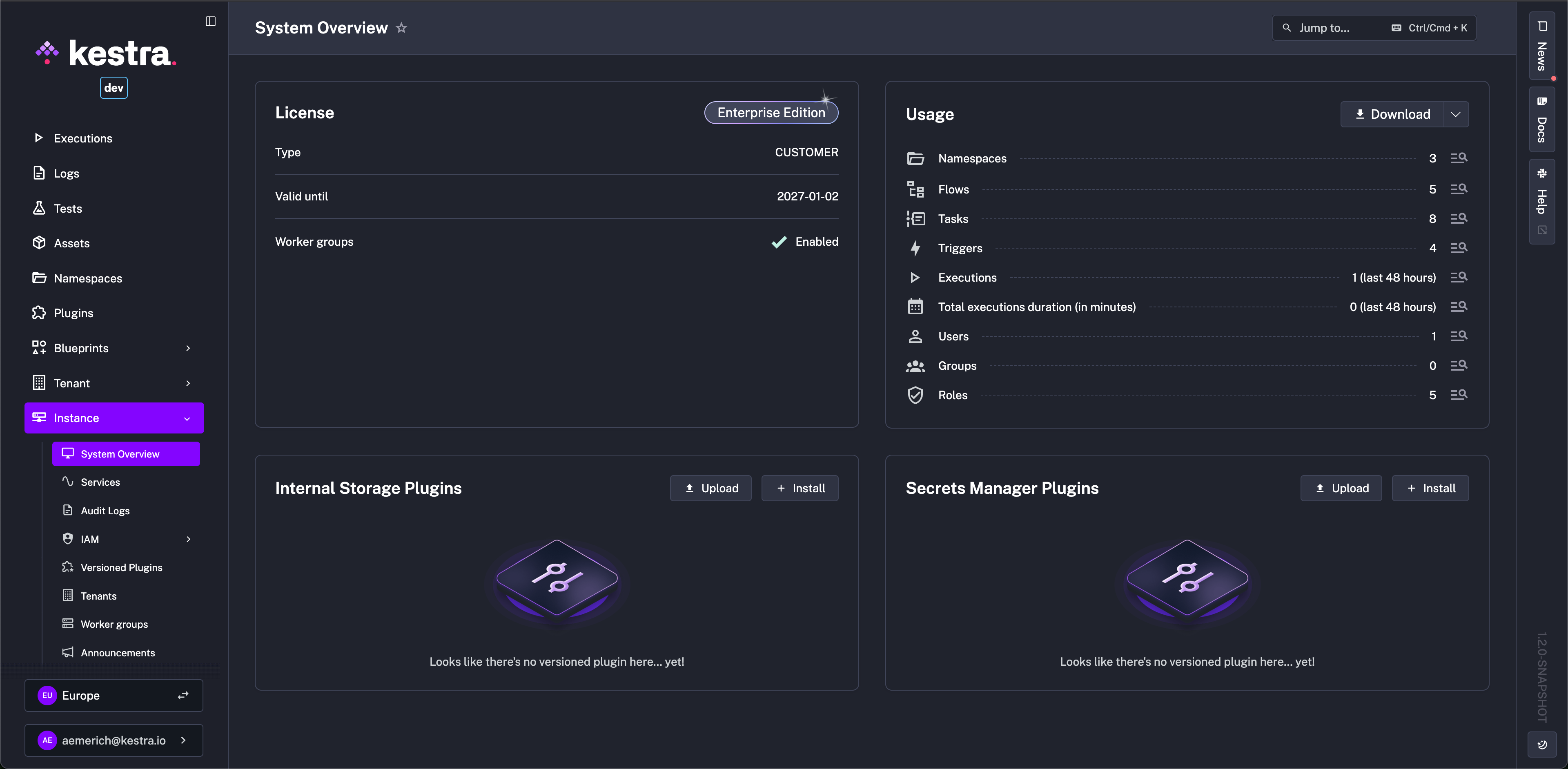
The Instance menu provides centralized control over your platform’s infrastructure so administrators can monitor service health, manage configurations, and communicate announcements (like planned maintenance downtime) to users without relying on additional observability tools. The System Overview tab gives a high-level snapshot of your instance’s operational status. Here, you can:
- View License Details: validity, usage statistics, and installed secrets and storage plugins.
Services
Kestra tracks the health of critical components, including:
- Workers: Execute tasks.
- Schedulers: Trigger workflows.
- Executors: Manage task execution.
- Webservers: Host the UI and API.
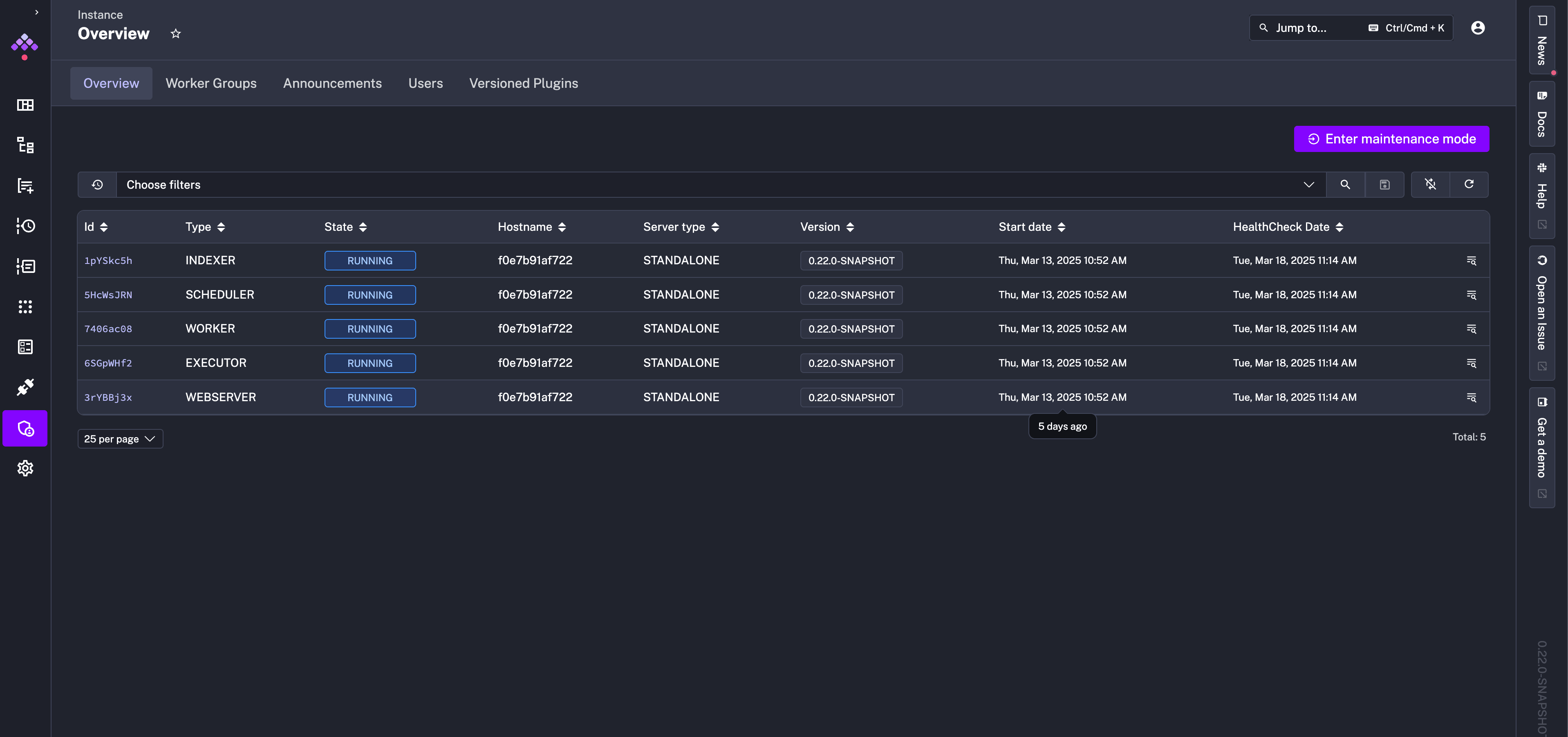
Each service displays:
- State: Whether the service is active (
RUNNING) or unresponsive. - Host Name: Identifier of the server/pod (e.g.,
kafka-ee-preview-79fb7755f8-zhlhq). - Server Type: For example, STANDALONE.
- Version
- Start Date
- Health Check Date
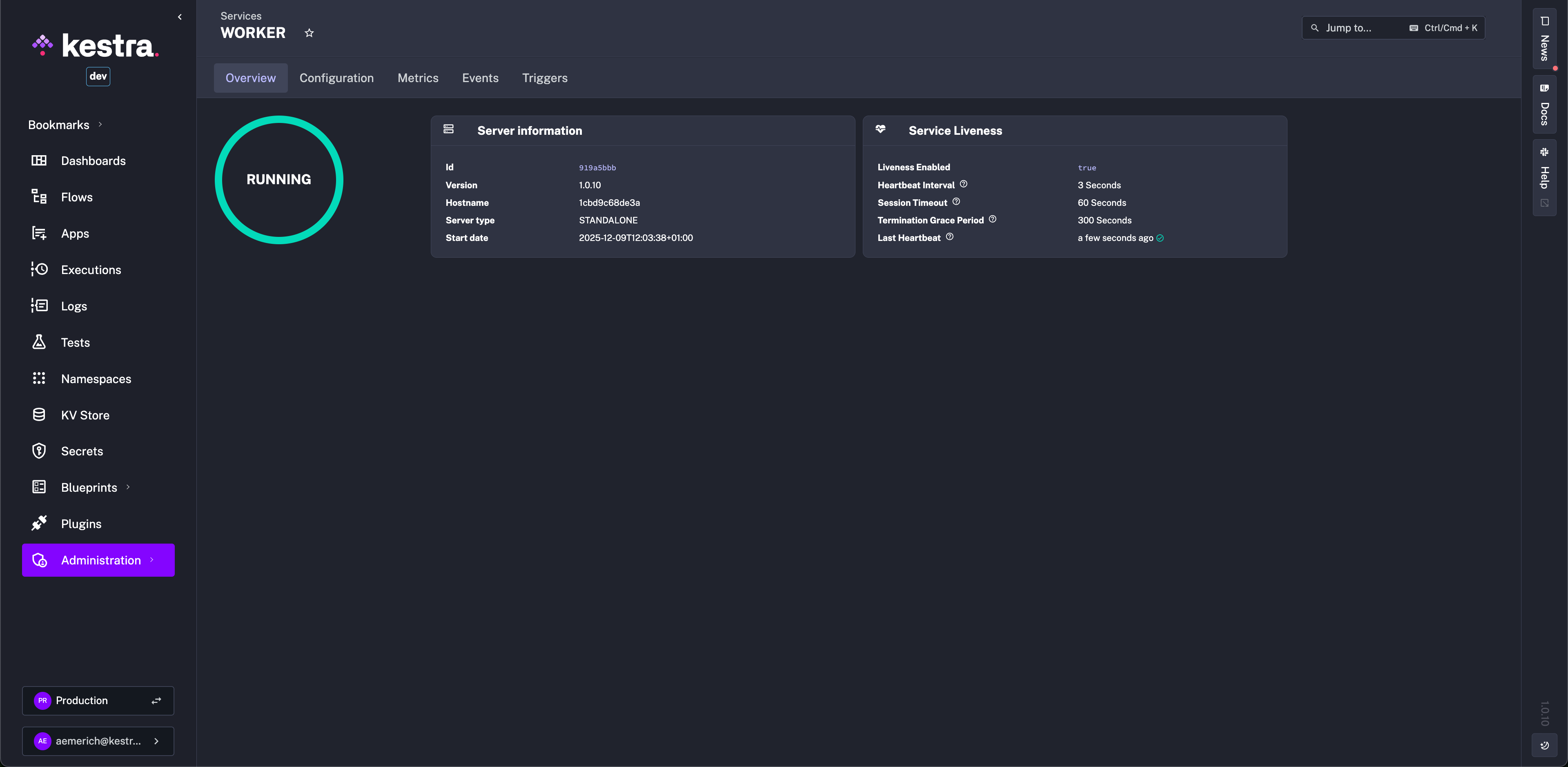
Server information and liveness
Each service instance provides technical details for debugging when clicked on:
- Hostname: Identifier of the server/pod (e.g.,
kafka-ee-preview-79fb7755f8-zhlhq). - Session Timeout: Time before an unresponsive service is marked offline (e.g.,
60 seconds). - Heartbeat Interval: The expected time between heartbeats.
- Last Heartbeat: Timestamp of the latest health check.
- Termination Grace Period: The expected time for this service to complete all its tasks before initiating a graceful shutdown.
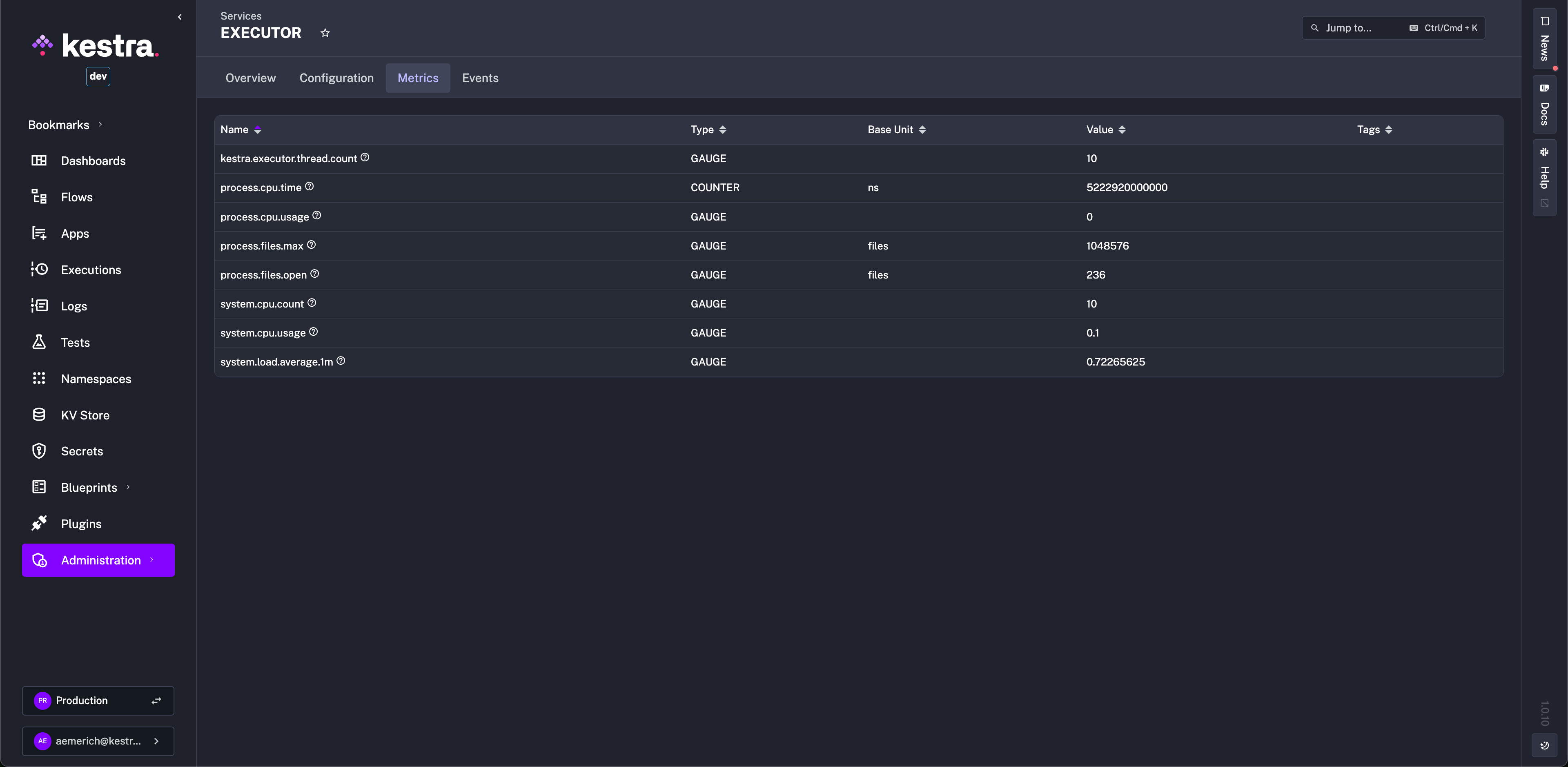
Additional tabs include Configuration to display port configuration, Metrics such as CPU Usage and Executor Thread Count:
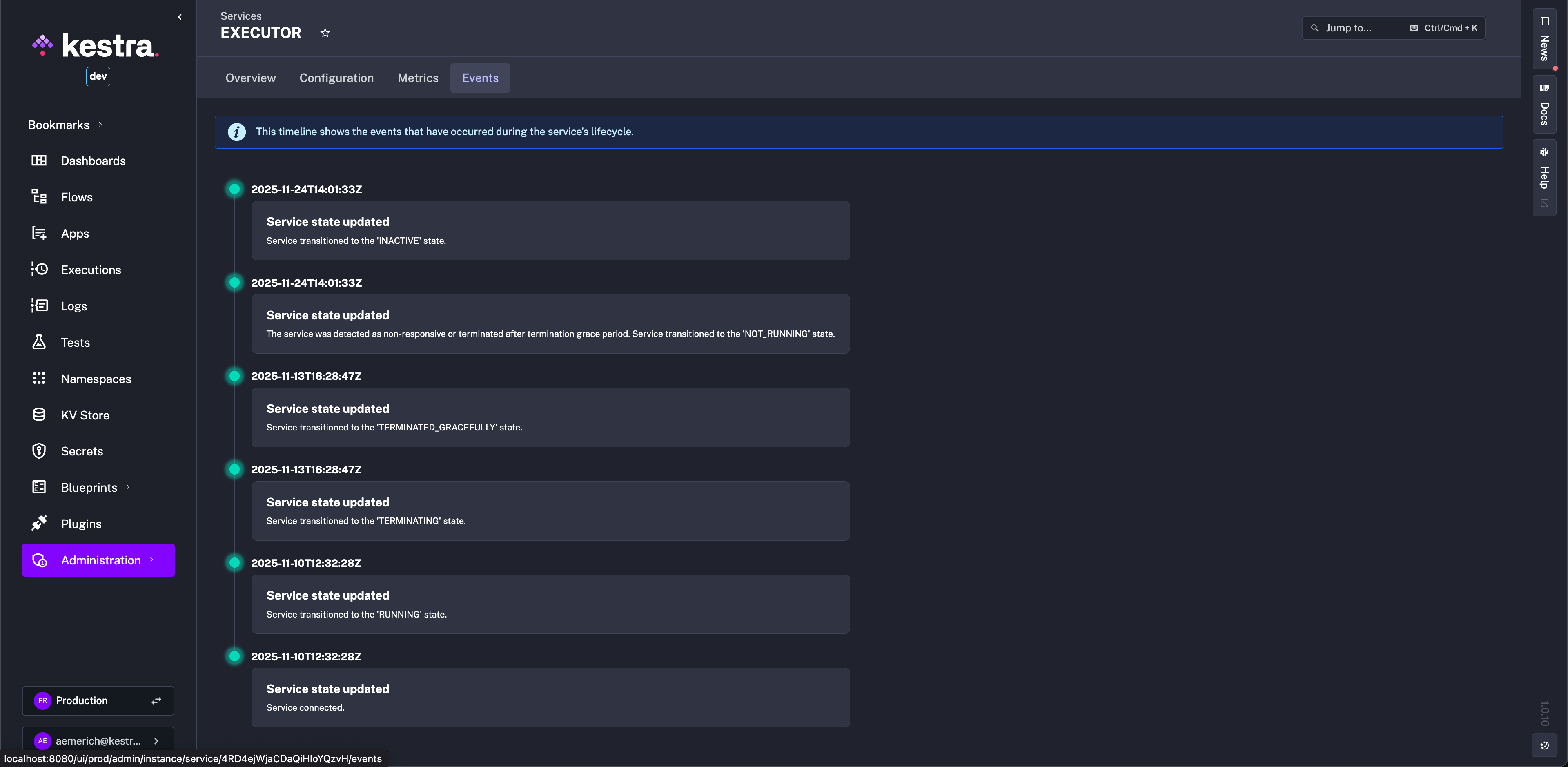
And an Events Timeline to give an overview of the service's lifecycle:
Announcements
Notify users about planned maintenance or updates:
- Create Announcements: Specify a title, message, and date range.
- Choose Type: Define severity of the announcement (e.g.,
info,warning,error).
Announcements appear in the UI during the selected period, ensuring users stay informed.
Maintenance Mode
From the Instance - Services tab, enter Maintenance Mode to temporarily pause all workflows and services for upgrades:
- Services enter a paused state, and new executions are blocked.
- Combine it with the Announcements feature so users see a maintenance banner while running workflows gracefully terminate.
Worker Groups
Create Worker Groups to isolate workloads or delegate tasks to specific workers:
- Add Worker Groups: Define groups with specific resource limits or labels.
- Assign Tasks: Route workflows to designated groups via worker group key within a task or trigger.
Audit Logs
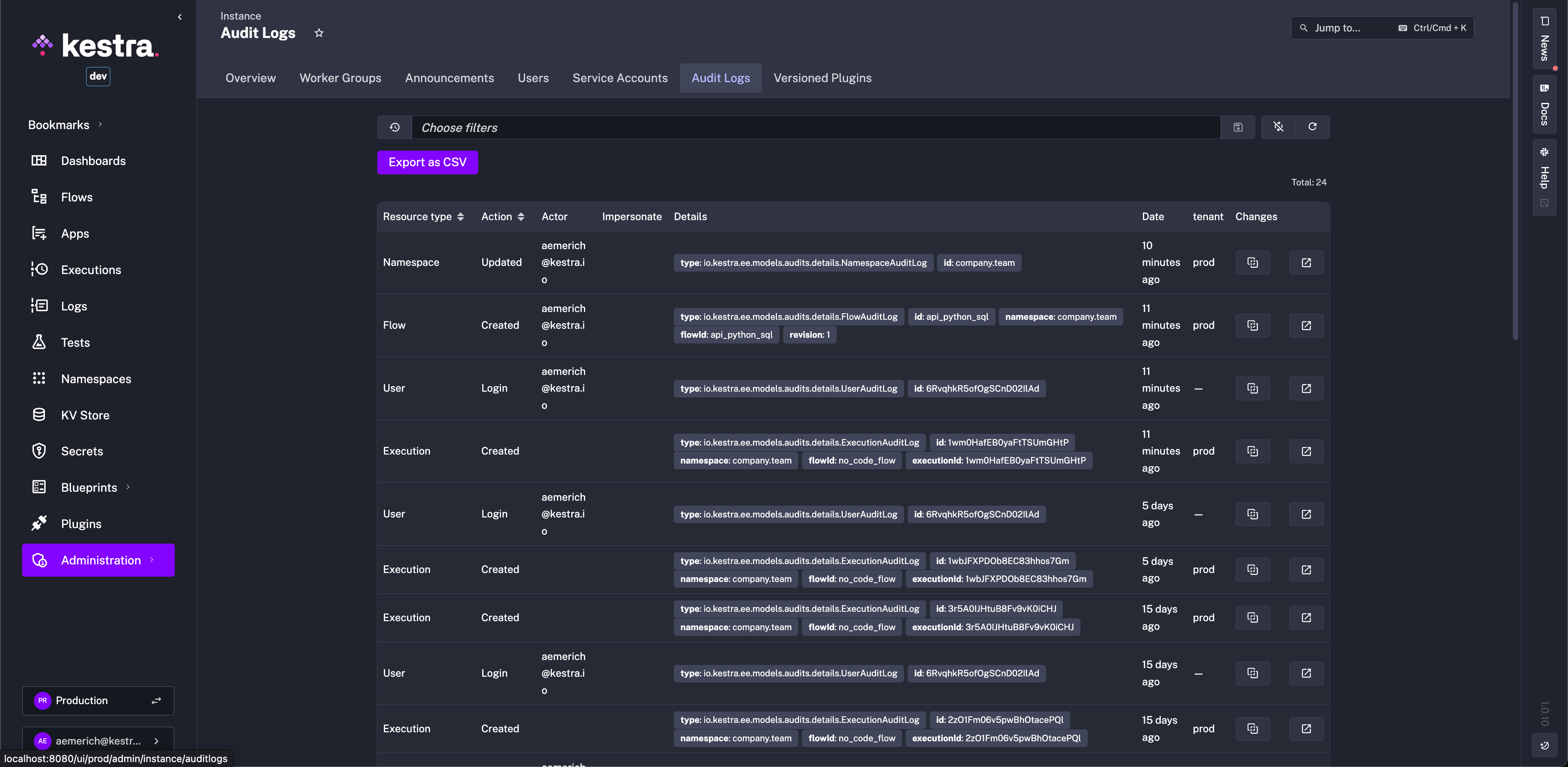
View Audit Logs at a glance to monitor actions on all resource types taken by users in the instance.
Versioned Plugins
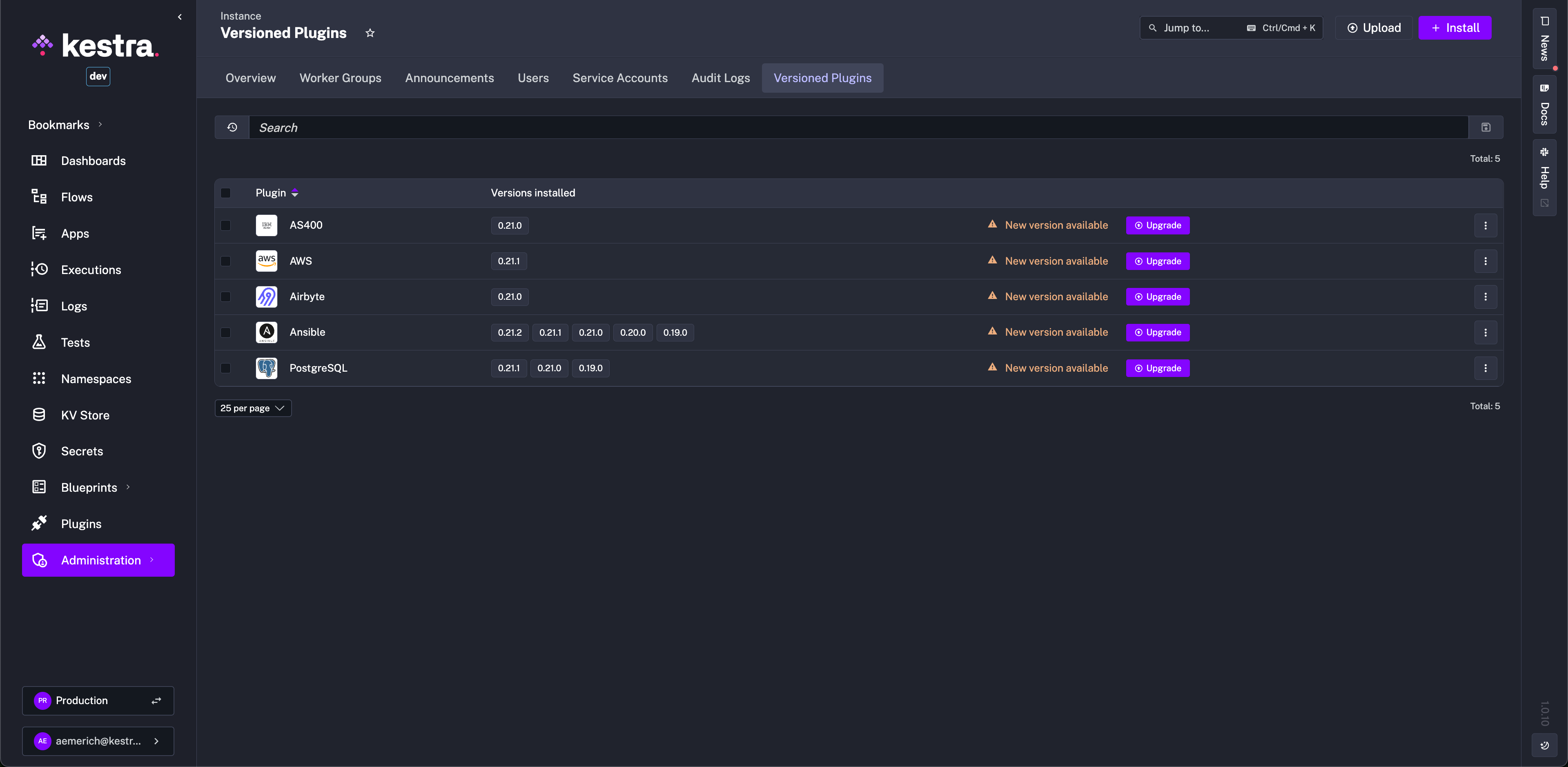
View all installed Versioned Plugins on the instance and upgrade, install, or uninstall as needed.
Instance management – services and maintenance

Announcements in Kestra Enterprise – In-App Banners
Communicate planned maintenance or incidents with in-app banners
Maintenance Mode in Kestra Enterprise – Pause for Upgrades
Prepare your Kestra instance for maintenance or migration.
Versioned Plugins in Kestra Enterprise – Manage Plugin Upgrades
Use multiple versions of a plugin depending on your instance requirements and upgrade path.
Was this page helpful?